
The ridge is the most exposed part of a thatched roof — and the first part that needs replacing.
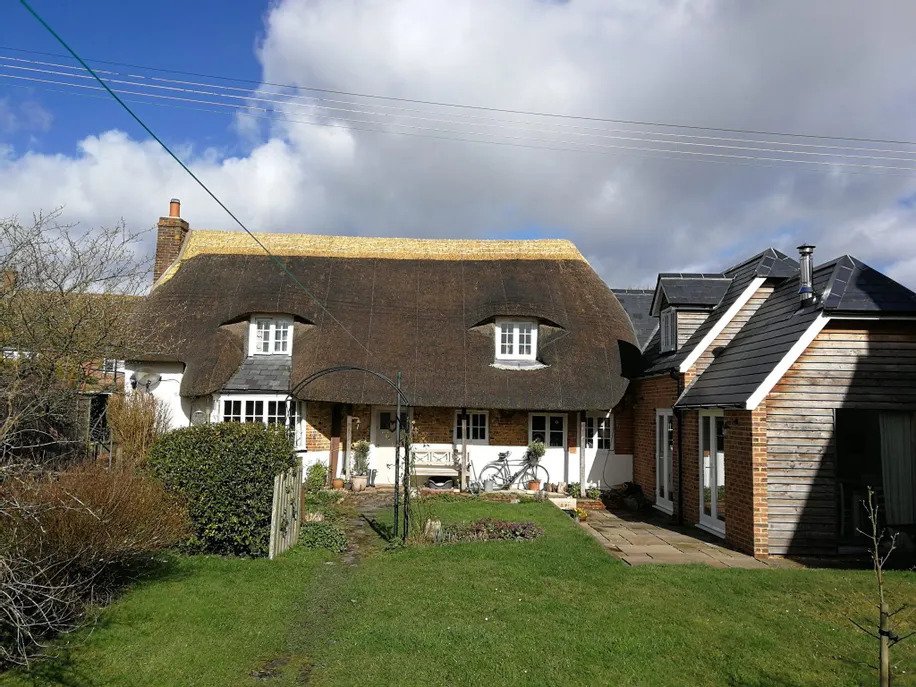
While the main body of a water reed roof can last 25–40 years, the ridge takes the brunt of wind, rain and frost and typically needs replacing every 10–15 years. Catching it at the right time protects the coat work beneath and avoids a considerably more expensive job further down the line.
What a Ridge Replacement Involves
Re-ridging means stripping away the existing ridge material, inspecting the underlying thatch for any issues, and laying a new ridge using fresh material — most commonly combed wheat reed or sedge. The new ridge is then dressed, secured with hazel liggers and spars, and finished to match the style of the roof.
The whole process usually takes one to three days depending on the size and complexity of the roof.
Ridge Styles
The ridge is not just structural — it is the most visible detail of a thatched roof and can be finished in a number of ways:
- Plain cut — clean, straight lines; suits most properties and is the most understated option
- Scalloped — a traditional decorative edge along the sides of the ridge
- Diamond pattern — a classic decorative design cut into the liggers; common on period properties
- Flush ridge — the ridge material is laid flush with the main coat rather than standing proud; traditional in parts of the West Country
If your property is listed, the style may be specified in the listing or by the local planning authority. Stuart can advise on what is and is not permitted before any work begins.
Signs Your Ridge Needs Attention
- The ridge profile has flattened or dipped in the middle compared to the ends
- The hazel liggers are pulling away or have broken at the fixings
- The material is visibly thin or weathered in patches
- Moss has taken a heavy hold across the ridge
- The decorative detailing has lost its definition
If you are unsure, a visit from Stuart to assess the roof will give you a clear answer.