
A freshly thatched roof is one of the most striking things in the English countryside — and with the right materials and workmanship, it will serve you for decades.
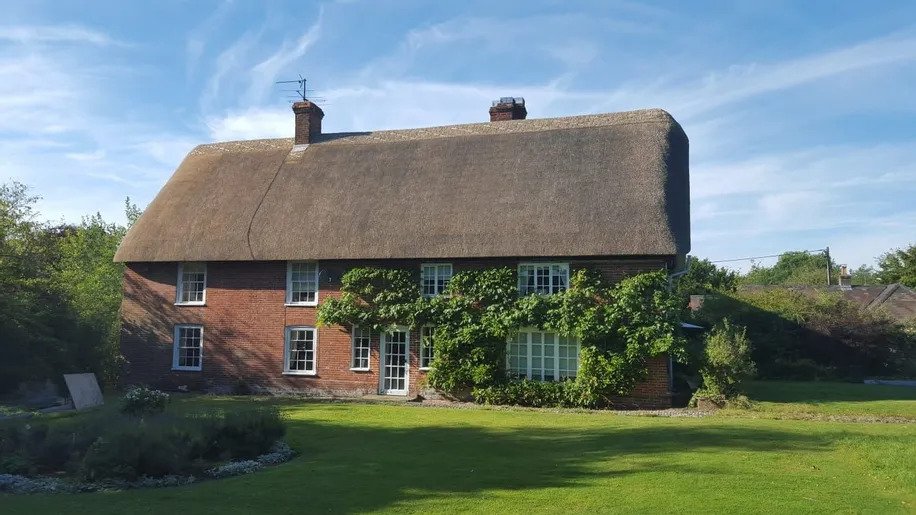
A full re-thatch is a significant investment, but it is also a predictable one. Done properly, a water reed roof will last 25–40 years. Long straw typically gives 15–25 years. The work is highly visible and the result speaks for itself.
When Is a Full Re-Thatch Needed?
Not every deteriorating thatched roof needs a full re-thatch — sometimes targeted repairs or a re-ridge are sufficient. A full re-thatch becomes necessary when:
- The coat work has thinned to the point where it can no longer be usefully repaired
- Water is entering through the coat rather than through the ridge or fixings
- The underlying structure needs inspection and the thatch needs to come off to allow access
- A property is being taken on after a long period of neglect and the roof is beyond repair
Stuart will assess your roof honestly and tell you what it actually needs — a full re-thatch is never recommended where a more targeted approach would serve the property equally well.
The Process
1. Scaffolding — the property is scaffolded to give safe working access around the entire roof.
2. Stripping — the old thatch is stripped back, typically to the sway. On older properties, Stuart always looks carefully at the condition of the rafters and any medieval oak structure before proceeding.
3. Repair of the base — any damaged spars, fixings or timbers are replaced at this stage.
4. New thatch — the new material is applied in deep, even courses from the eaves upward, fixed with stainless steel screws, wires and hazel spars. The depth of material — typically 300mm or more — is critical to the longevity of the roof.
5. Finishing — the eaves and gable ends are dressed and trimmed, and the new ridge is laid and finished to the agreed style.
Material Choices
The three materials used for re-thatching in Wiltshire are:
- Water reed — the most durable option, lasting 25–40 years. Gives a clean, precise finish. Most commonly specified for new thatching work.
- Combed wheat reed — lasts 25–35 years; a slightly softer appearance than water reed.
- Long straw — lasts 15–25 years; softer, more rounded profile. Used on some listed properties where the planning authority requires it to match the historical character of the building.
If your property is listed, the material may be specified in the listed building consent. Stuart has extensive experience working with Wiltshire Council’s Historic Environment team and can guide you through the consent process where required.
What Affects the Cost?
The main factors are the size of the roof, the material chosen, and the accessibility of the property. Steeply pitched roofs, complex valleys, and dormer windows all add to the complexity and time involved. Stuart provides a detailed written quote covering all of these factors before any work begins.